Let's cut through the noise. You've probably heard blue chalcedony is good for "calm" or "communication." That's true, but it's like saying water is wet—it doesn't tell you how to swim. After years of working with stones and seeing clients get frustrated with vague crystal advice, I've learned the real value lies in the specifics. Blue chalcedony isn't a magic wand; it's a subtle, persistent ally. Its primary gift is stabilizing emotional energy, particularly the chaotic kind that comes from fear, social anxiety, or information overload. Think of it less as a sedative and more as a master negotiator for your nervous system. This guide will move beyond the surface to show you exactly how to harness its benefits, how to spot a good piece, and—crucially—the common mistakes that make it seem like it's "not working."
Your Quick Guide to Blue Chalcedony
What Is Blue Chalcedony? A Mineralogy Refresher
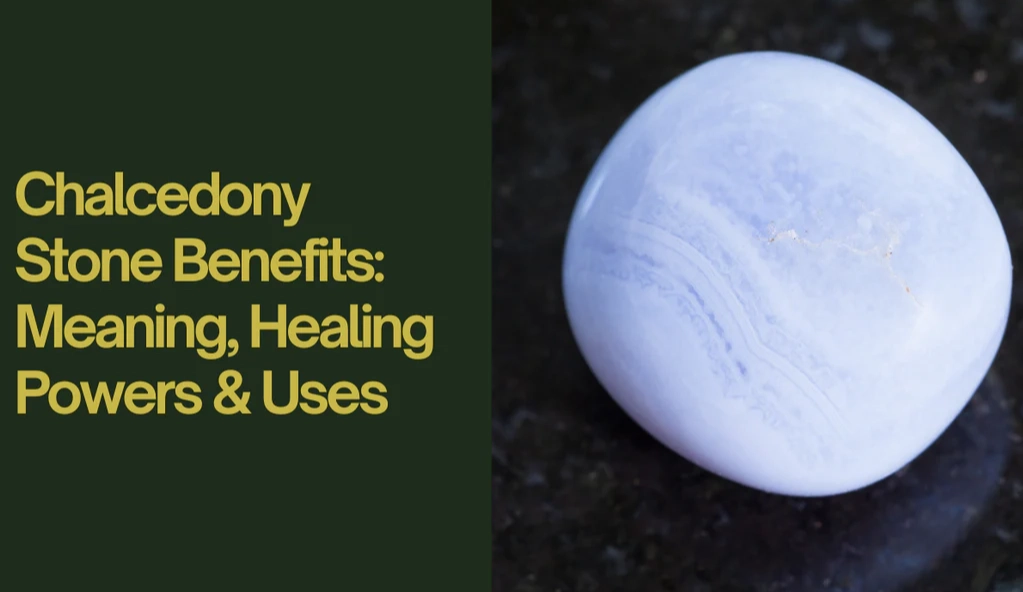
First, a bit of clarity to avoid confusion. Chalcedony is a cryptocrystalline form of quartz, meaning its crystals are too small to see with the naked eye. This gives it a waxy, smooth luster rather than the faceted sparkle of amethyst or citrine. The blue color primarily comes from trace amounts of titanium or iron, and it can range from a pale, almost milky sky-blue to a deeper cornflower shade. It's often found in volcanic rocks or as nodules in sedimentary deposits. Major sources include Namibia, India, Turkey, and the United States (particularly Oregon and California).
Here's where people get tripped up: blue chalcedony is not the same as blue lace agate. Blue lace agate is a banded variety of chalcedony, famous for its striking light and dark blue stripes. While their properties overlap, traditional crystal lore often attributes a more gentle, feminine energy to blue lace agate, while blue chalcedony is seen as a broader, more general stabilizer. If you're drawn to strong patterns, go for lace agate. If you prefer a solid, soothing color field, standard blue chalcedony is your pick.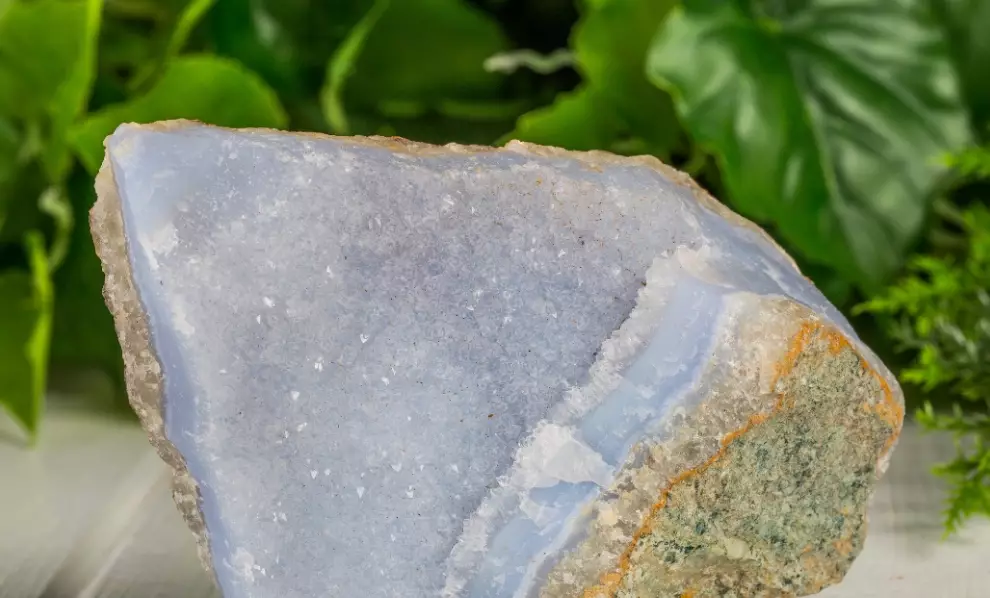
Personal Note: I've found that stones from Namibia often have a particularly vibrant, clear blue hue, while some from India have a more grayish undertone. It doesn't make one "better," but the Namibian pieces tend to resonate more with people seeking vivid communication aid, while the gray-blue ones feel more grounding for anxiety.
The Core Healing Benefits: Emotional, Physical, Spiritual
The benefits of blue chalcedony aren't a random list. They orbit a central theme: creating safe, clear space for expression and rest.
Emotional & Psychological Benefits
This is where blue chalcedony shines. It doesn't blast away negativity. It absorbs and dissipates it, like a sponge for emotional static.
- For Social Anxiety & Speaking: This is its superstar application. It's not about making you an extrovert. It works on the throat chakra to quiet the inner critic that says "you'll sound stupid." I recommend it to clients who freeze in meetings or struggle to set boundaries with family. It promotes a feeling of being heard, which in turn makes speaking feel less risky.
- Diffusing Anger & Irritability: Got a short fuse? Blue chalcedony cools hot-headedness, not by suppressing it, but by helping you articulate the root of the frustration before it explodes. It turns a shout into a firm sentence.
- Memory & Learning: There's a historical link here. Ancient civilizations used chalcedony for public speakers to remember their lines. In a modern context, it can help with information retention, especially language learning or absorbing complex concepts, by reducing the mental "noise" that interferes with focus.
Purported Physical Benefits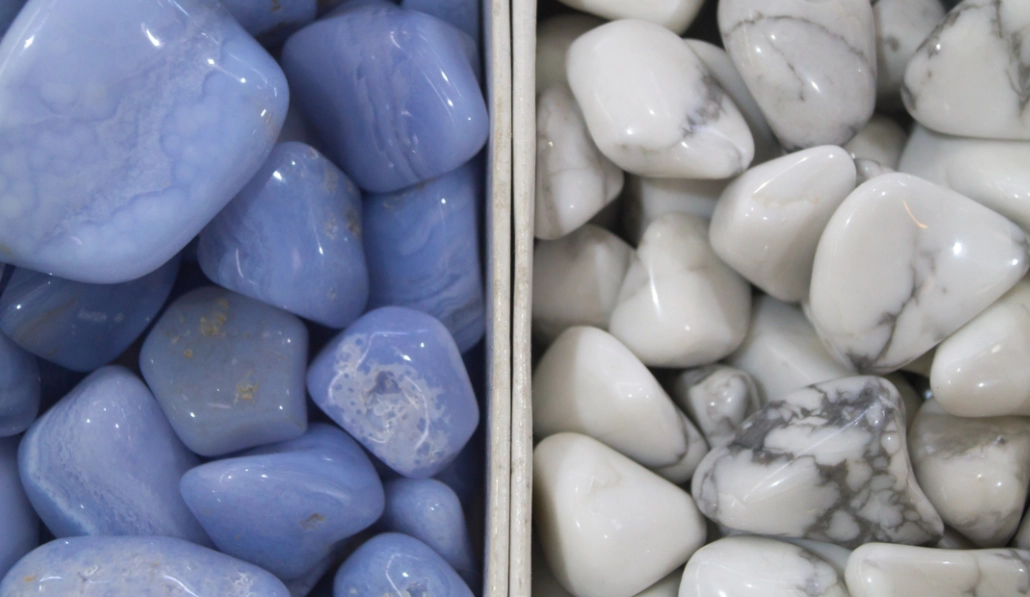
In crystal healing traditions, blue chalcedony is often associated with the throat, sinuses, and cooling inflammation. It's critical to state this is based on traditional belief, not medical science. You should never replace medical treatment with a crystal. That said, practitioners have historically used it to support:
- Soothing sore throats or laryngitis (often by placing a tumbled stone on the throat during rest).
- Easing symptoms of seasonal allergies or sinus pressure.
- Supporting the body's fluid regulation systems.
My pragmatic view? The deep relaxation it induces can certainly lower stress hormones, which has a downstream positive effect on many physical systems. The benefit is likely indirect, through stress reduction.
Spiritual & Energetic Benefits
Blue chalcedony is considered a stone of benevolence and maternal energy. It's said to encourage generosity, foster a sense of community, and connect one to divine or angelic communication (hence its historical nickname, "the Speaker's Stone"). In meditation, it can help quiet mental chatter, making it easier to reach a state of receptive silence. Some use it to enhance dream recall or promote peaceful sleep when placed under a pillow.
How to Use Blue Chalcedony Effectively (Beyond Holding It)
Buying a stone and dropping it on a shelf does very little. Intention and interaction are key. Here are methods that actually work.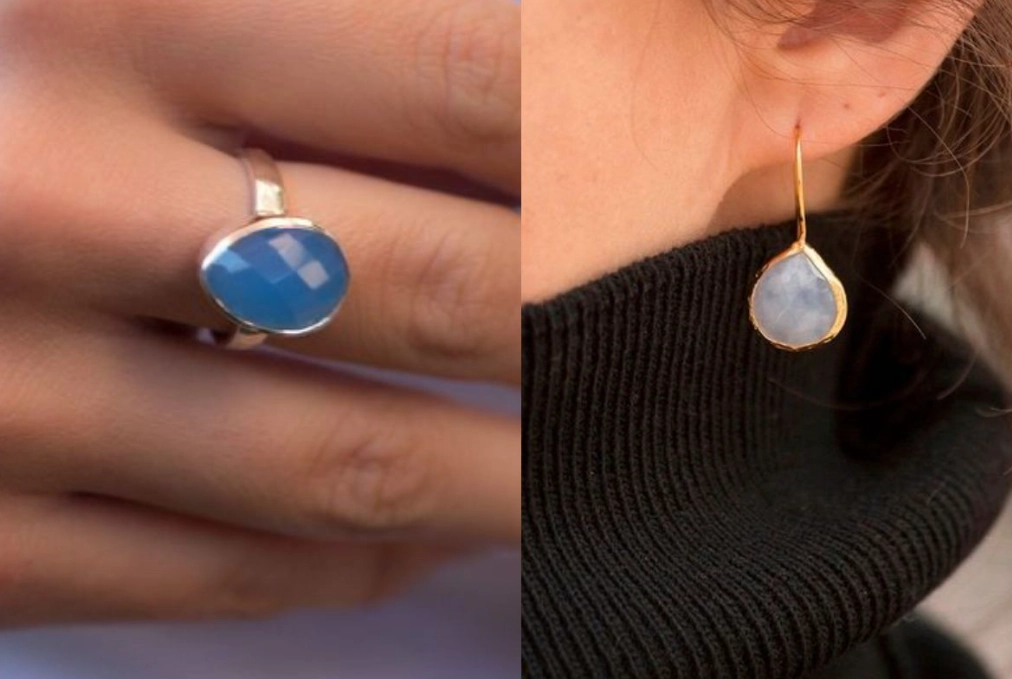
Wearing It: The 24/7 Method
Jewelry is the most potent way to work with blue chalcedony consistently.
- Pendant or Necklace: Worn close to the throat chakra, this is ideal for communication issues, thyroid support (in an energetic sense), and maintaining calm in conversation. A simple wire-wrapped pendant is affordable and effective.
- Bracelet or Ring: Keeps the energy on your person. A bracelet on your writing hand can be helpful for authors or students. A ring serves as a constant, subtle reminder to speak your truth.
- Earrings: An often-overlooked option. Placing the stone near the ears reinforces the "listening" aspect—both to others and to your own inner voice.
Strategic Placement in Your Environment
Where you put the stone directs its influence.
- Home Office or Desk: A small sphere or tower on your desk can help maintain focus during work calls, writing, or studying. It creates a "bubble" of concentrated calm.
- Living Room: Promotes harmonious communication among family or housemates. A bowl of tumbled stones on a coffee table can subtly shift the energy of the room.
- Bedroom (Nightstand): To encourage peaceful sleep and pleasant dreams. Keep it at least a foot from your head if you're a sensitive sleeper, as its energy might keep some people awake.
- Car Cupholder: A personal favorite. It helps maintain patience and clear-headedness during stressful commutes or road trips.
Meditation & Direct Practice
Hold a tumbled stone in your receiving hand (left hand for most) during meditation. Focus on the sensation of coolness. Visualize a soft, blue light emanating from the stone and enveloping your throat and chest. Silently set an intention, like "I communicate with clarity and ease" or "I release the need for anxious rehearsal." Even five minutes of this is more powerful than weeks of passive carrying.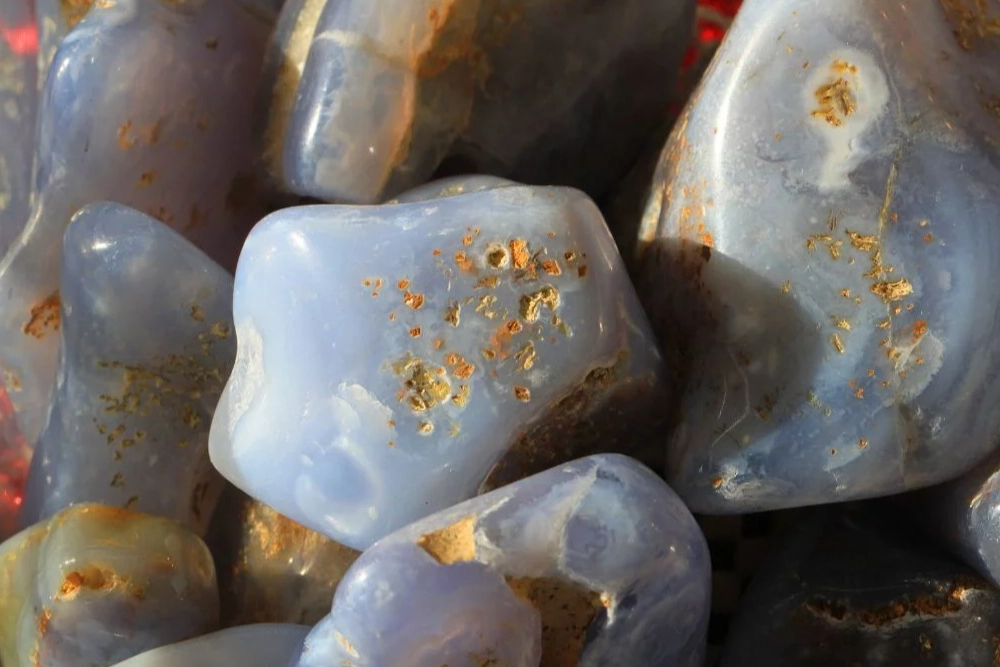
Cleansing and Charging (The Non-Negotiable Step)
Stones absorb energy. If yours feels "heavy" or stops seeming effective, it needs a reset. Do not use salt or saltwater on blue chalcedony—it can damage its surface and structure. Here are safe methods:
- Running Water: Hold under lukewarm tap water for 30-60 seconds. Pat dry.
- Smoke: Pass it through the smoke of sage, palo santo, or incense.
- Moonlight: Place it on a windowsill during a full moon. This is excellent for charging its intuitive properties.
- Sound: Use a singing bowl or tuning bell near it.
- Other Crystals: Place it on or near a larger cluster of clear quartz or selenite overnight.
Choosing the Right Stone: Quality, Shape, and Price
Not all blue chalcedony is created equal. You don't need to spend a fortune, but knowing what to look for saves disappointment.
Color & Clarity: Look for a color that genuinely appeals to you. Some prefer the pale, almost opaque varieties; others like more translucency. Avoid stones with large, obvious cracks or chips. Minor veining or cloudiness is natural and doesn't affect its energy.
Shape & Purpose:
- Tumbled Stones: Great for carrying in a pocket, holding during meditation, or placing around the home. Usually $5-$20.
- Spheres: Emit energy evenly in all directions. Ideal for a desk or room centerpiece. $25-$80+ depending on size.
- Towers/Points: Direct energy flow. Point it towards you to draw energy in, or away to project it (e.g., point it at your workspace). $15-$50.
- Raw Pieces: Unpolished, natural chunks. Have a very grounded, earthy feel. Good for garden altars or if you prefer a less refined look. $10-$40.
- Jewelry: Price varies wildly based on craftsmanship and metal. A simple sterling silver pendant with a cabochon can be $30-$100.
Where to Buy: Reputable local crystal shops are best, as you can feel the stone's energy. Online, vendors like Energy Muse, Healing Crystals, or well-reviewed Etsy sellers with clear photos are reliable. Avoid mass-market websites with stock photos—you often get a pale imitation of what's advertised.
The Biggest Mistake I See: People buy a tiny, low-quality chip, carry it once, and say "it didn't do anything." Invest in a piece that has some substance—at least the size of a quarter for a tumbled stone. The physical presence matters. It's a tool, not a trinket.
Your Blue Chalcedony Questions Answered
 I'm very sensitive to energy. Could blue chalcedony be too stimulating for sleep?
 Blue chalcedony's benefit isn't in dramatic, overnight change. It's in the quiet accumulation of calm moments, the sentences spoken that you used to swallow, and the gradual feeling that your internal world is less of a storm and more of a navigable sea. Start with one quality piece. Use it with intention. Cleanse it regularly. Pay attention to the subtle shifts—the meeting where your voice stayed steady, the difficult conversation that ended with a hug, not a slammed door. That's where its real magic lives.
Related Articles
Why Is Azurite So Expensive? The Real Reasons Behind the Price
Ruby Stone Month: The Complete Guide to July's Birthstone
Dalmatian Jasper: Spiritual Meaning, Healing Properties & How to Use
Lapis Lazuli Healing Properties Explained: A Complete Guide to Spiritual & Physical Benefits
Selenite Crystal Uses: A Complete Guide for Energy, Healing & Home