Let's talk about Mookaite. You've probably seen it—those warm, earthy tones of yellow, cream, burgundy, and sometimes even a soft purple, all swirled together in a single palm stone. It's stunning. But if you think it's just another pretty jasper for your collection, you're missing the real story. Mookaite healing properties run deep, connecting you to a primal sense of stability and vitality that's hard to find elsewhere. Hailing exclusively from the Kennedy Ranges of Western Australia, this stone isn't just about looks; it's a grounding force, an emotional anchor, and for many, a key to unlocking a more resilient version of themselves. I've worked with crystals for over a decade, and Mookaite consistently stands out for its no-nonsense, practical energy. It doesn't promise magic fixes. Instead, it offers a steady hand when life feels chaotic.
Your Quick Guide to Mookaite
What Exactly is Mookaite Jasper?
First, a bit of geology to understand its character. Mookaite is technically a silicified porcellanite, a type of chert, but everyone in the crystal world calls it a jasper. The name comes from "Mooka Creek," the area in Western Australia where it's found. What makes it special is its composition—it's formed from the skeletons of ancient radiolaria, tiny marine creatures, fossilized over millions of years. That origin story matters. It tells you this stone carries the energy of deep time and the ancient earth.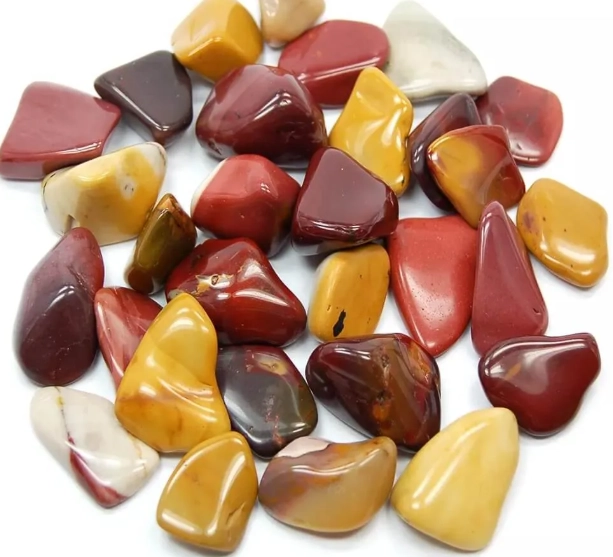
The colors aren't random. The yellows and creams come from iron oxides, the reds and burgundies from higher iron content, and the rare purples hint at manganese. When you hold a piece, you're holding a snapshot of an ancient seabed. This isn't a stone that formed quickly; it took its time. That slow, deliberate creation is reflected in its energy—patient, enduring, and deeply stabilizing.
Mookaite at a Glance
Primary Source: Mooka Creek, Kennedy Ranges, Western Australia. It's not found anywhere else in the world, which adds to its unique vibration and, frankly, its value. Be wary of vendors claiming "Mookaite" from other countries.
Key Colors: A mix of yellows, creams, reds, burgundies, and occasional mauves. The best pieces show a clear, vibrant mix, not muddy browns.
Chemical Composition: Primarily silicon dioxide (SiO₂) with impurities of iron and manganese creating the colors.
Common Forms: Tumbled stones, palm stones, cabochons for jewelry, and occasionally rough specimens. It's not typically found in large geodes or clusters.
Emotional & Mental Healing Properties: Your Grounding Anchor
This is where Mookaite shines. In a world that feels increasingly fragmented and fast-paced, its core healing property is grounding. But it's not a heavy, sleepy grounding like some stones. It's an active, supportive one.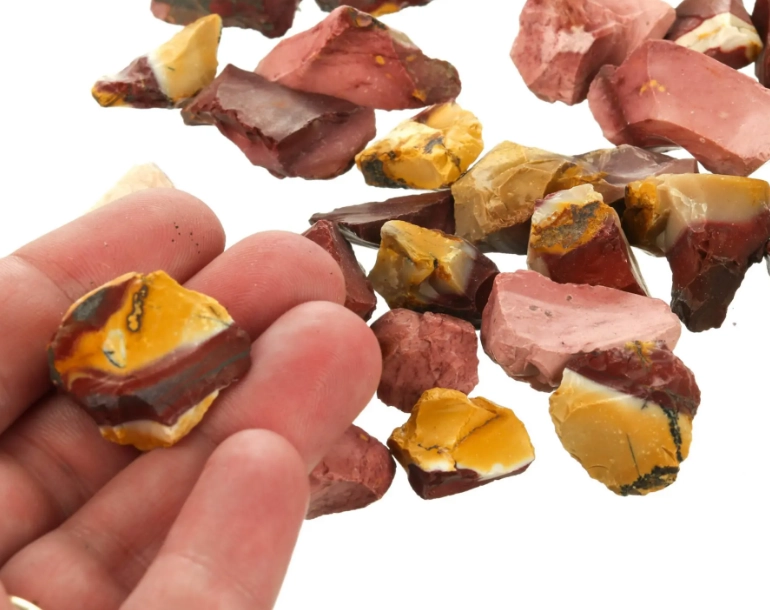
Combating Anxiety and Overwhelm
If your mind races with a hundred thoughts at once or you feel untethered by stress, Mookaite acts like an emotional paperweight. It doesn't silence your thoughts; it helps sort them. The energy is often described as connecting to the "wisdom of the earth," promoting a sense that you are supported and safe. I've recommended it to clients who feel decision fatigue. Holding a piece during a moment of panic can literally help you feel your feet on the floor again, pulling you out of a spiraling headspace and back into your body.
Promoting Emotional Resilience and Acceptance
Here's a non-consensus point I've observed: Mookaite is less about forcing change and more about fostering acceptance of "what is" as a foundation for growth. Its variegated colors symbolize the integration of different aspects of the self. It encourages you to accept your current emotional state—the fear, the hesitation, the joy—without judgment. This acceptance paradoxically builds the resilience to move forward. It's the stone for saying, "Okay, this is where I am. Now, what's the next practical step?" It cuts through emotional drama and encourages pragmatic problem-solving.
Enhancing Willpower and Determination
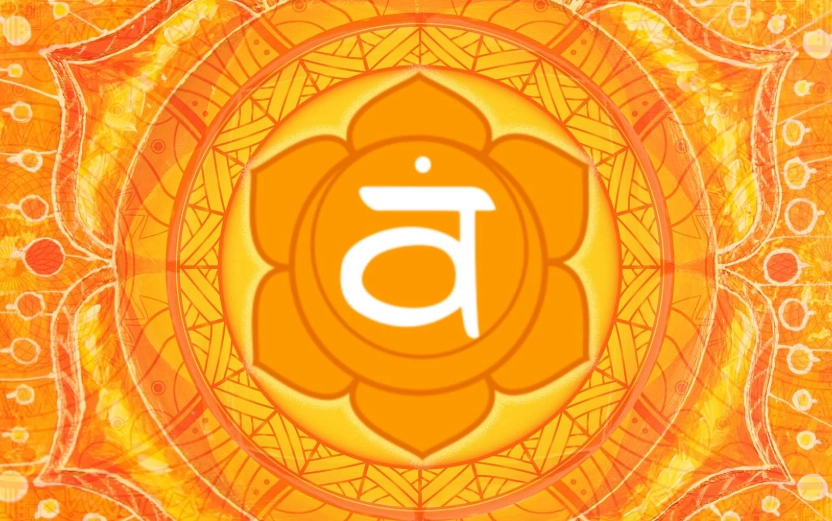
Linked to the sacral and solar plexus chakras, Mookaite is said to stoke your inner fire. It's for when you know what you need to do but lack the motivation to start. It doesn't give you a frantic burst of energy. Instead, it cultivates a steady, determined drive. Think of it as the difference between a sprint and a marathon pace. It helps you conserve and direct your emotional energy toward long-term goals, making it excellent for personal projects, career shifts, or breaking old habits.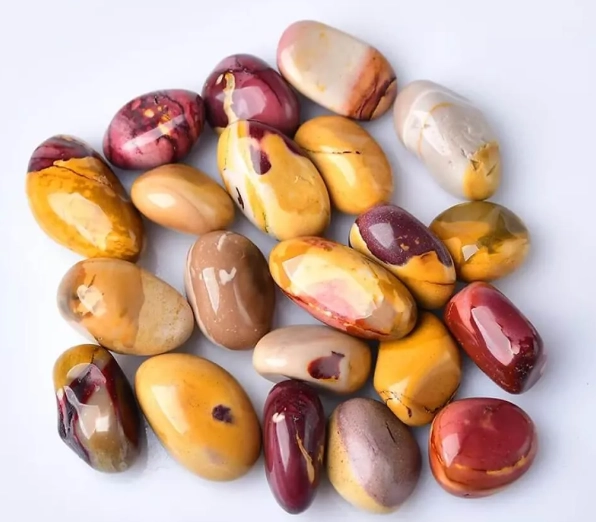
Properties for Physical Vitality & Wellness
In crystal healing traditions, Mookaite's connection to the earth and its iron content associate it with physical vitality and the blood. The thinking is that its grounding energy supports the body's fundamental systems.
Support for the Immune System: It's often cited as a general booster for the immune system. The idea is that by reducing stress (a known immune suppressor), the body can function more optimally. I view it more as a supportive ally during convalescence, helping to maintain a positive, determined mindset for healing.
Detoxification and Cleansing: Some practitioners link Mookaite to the purification of the blood and the elimination of toxins. This is likely symbolic, stemming from its earthy, filtering nature. A more practical view is that its energy might encourage you to make healthier lifestyle choices—drinking more water, choosing better foods—that naturally support the body's detox pathways.
A Vital Reminder: This is crucial. Mookaite, or any crystal, is not a substitute for professional medical advice, diagnosis, or treatment. If you have a health concern, see a doctor. Think of Mookaite's physical healing properties as complementary support, working on the level of energy and mindset to create an environment where physical wellness is more likely to flourish. Relying on a stone instead of seeking medical help is the biggest mistake I see newcomers make.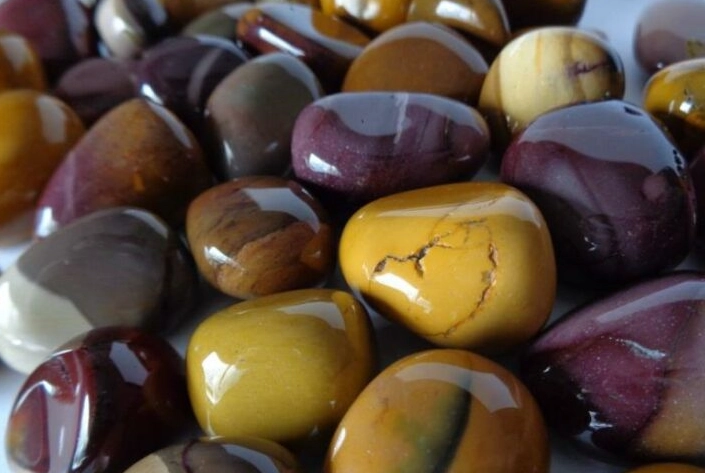
How to Use Mookaite in Your Daily Life
Theory is fine, but how do you actually work with this stone? Here are concrete, actionable ways based on what I've seen work.
1. As a Pocket Stone or Jewelry
The simplest method. Carry a tumbled stone in your pocket or wear it as a pendant or bracelet. When you feel anxious or scattered, simply hold it. Focus on its weight and temperature. This tactile connection is a quick anchor. A pendant keeps the energy close to your heart and solar plexus all day.
2. In Meditation and Grounding Practices
Sit comfortably with a piece of Mookaite in your hand or place it on your lower abdomen (sacral chakra) or just below your navel (solar plexus). Don't force anything. Just breathe and visualize its earthy energy as roots growing from your body into the ground, stabilizing you. It's particularly effective for "earthing" meditations.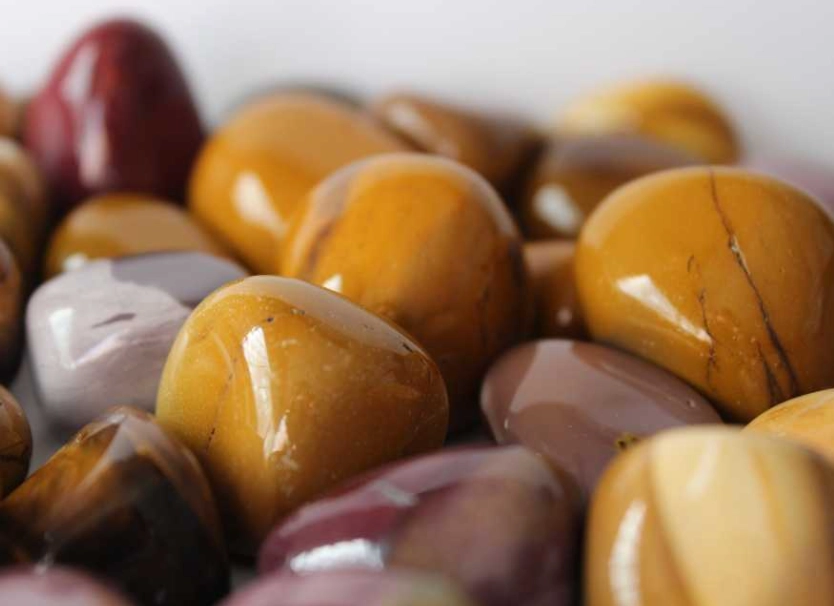
3. For Decision-Making and Problem-Solving
Place Mookaite on your desk when working on a complex problem. Its energy is said to promote clear, practical thinking. Before a meeting where you need to stand your ground, hold it for a minute to center yourself. I know an artist who keeps a large piece on her drafting table to maintain focus during long projects.
4. Creating a Supportive Environment
Place a specimen in the southwest corner of your home (associated with the earth element in some traditions) or in your home office to promote stability and sustained effort. In the bedroom, it can encourage restful sleep by calming a busy mind.
Choosing & Caring for Your Genuine Mookaite
The market is flooded with look-alikes and dyed stones. Here’s how to spot the real deal.
Look for the Signature Colors: Genuine Mookaite has a distinct, often creamy or waxy appearance with bands and patches of color that blend softly. Be suspicious of stones with unnaturally bright, uniform reds or yellows—they might be dyed agate. The colors should feel earthy and natural.
Check the Source: Reputable sellers will state it's from Western Australia. If the origin is vague or listed as China or India, it's almost certainly not Mookaite.
Trust the Feel: Real Mookaite has a substantial, smooth feel. It's not overly lightweight or glassy.
Cleansing and Charging: Mookaite, being an earthy stone, loves simple, grounding cleansing methods.
- Smoke: Pass it through the smoke of sage, palo santo, or cedar.
- Earth: Bury it in dry soil (not wet, to avoid damage) for 24 hours.
- Sound: Use a singing bowl or tuning fork.
- Moonlight: Gentle moonlight is fine, but avoid harsh, direct sunlight for long periods as it can fade the rich colors over time.
Recharge it by placing it on a bed of hematite tumbled stones or with a clear quartz cluster.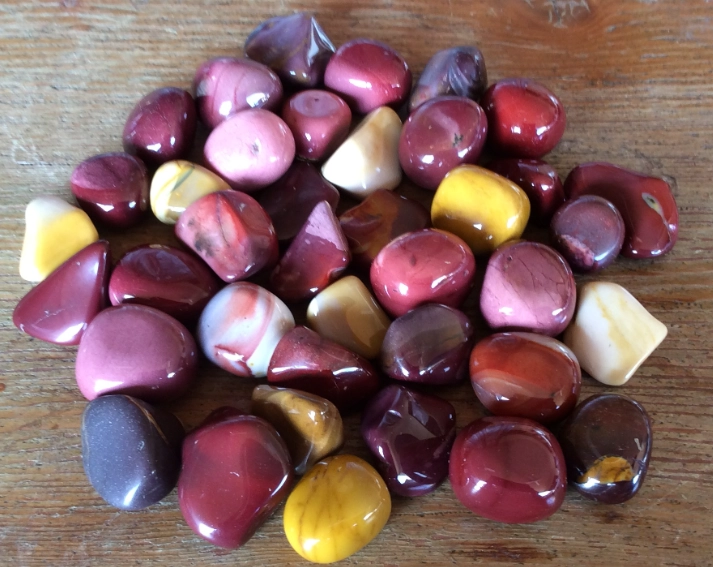
Your Mookaite Questions Answered
Can I use Mookaite with other crystals, like Black Tourmaline or Amethyst?
How often should I cleanse my Mookaite stone?
Is Mookaite safe to use in elixirs or direct skin contact?
What's the biggest mistake people make when first using Mookaite?
Where can I learn more about the geology of Mookaite from authoritative sources?
Related Articles
Green Moss Agate: A Complete Guide to Its Healing Properties & Uses
White Moonstone: Ultimate Guide to Meaning, Uses & Healing Properties
Ocean Jasper Green: A Complete Guide to Properties, Uses & Value
Types of Jasper Stone: A Complete Guide to Patterns, Colors & Meanings
Who Should Avoid Rose Quartz? 5 Surprising Reasons & Safer Alternatives