You see it in crystal shops and on Instagram—a stone with waves of blue that look like a frozen piece of the ocean. It's Larimar. But beyond its obvious beauty, what's the real deal? Why do people get so obsessed with it, and why is it often priced higher than many other semi-precious stones? Let's cut past the generic marketing. The specialness of Larimar isn't just one thing; it's a combination of a wild geological story, a color you can't find anywhere else, a powerful presence in the crystal healing world, and a market reality that's both fascinating and frustrating. I've been collecting and studying gemstones for over a decade, and Larimar's story is one of the most compelling, yet also one where beginners often make costly mistakes.
What You’ll Discover in This Guide
- The Incredible Story of Larimar’s Discovery
- Why Larimar’s Geology Makes It One-of-a-Kind
- The Meaning Behind Larimar’s Oceanic Color
- The Healing Properties of Larimar: More Than Just a Pretty Stone?
- Larimar’s Value & Investment Potential: What You’re Really Paying For
- Where to Buy Authentic Larimar & How to Spot Fakes
- Caring for Your Larimar: A Simple Maintenance Guide
- Your Larimar Questions, Answered by a Collector
The Incredible Story of Larimar’s Discovery
Most gems have ancient histories. Larimar doesn't. Its modern discovery is shockingly recent. In 1974, a Dominican man named Miguel Méndez and a visiting American Peace Corps volunteer, Norman Rilling, found unusual blue pebbles in a streambed at the foot of the Bahoruco Mountain Range. The locals had known about them for generations, calling them "Blue Stone." Méndez combined his daughter's name, Larissa, with "mar" (Spanish for sea), and Larimar was born.
This isn't just trivia. The late discovery means Larimar lacks the millennia of lore attached to stones like Jade or Turquoise. Its entire mythology and healing profile have been constructed in the last 50 years, largely driven by the New Age movement and the Dominican Republic's push to promote a national treasure. It’s a modern gem with a rapidly invented tradition, which is fascinating in itself.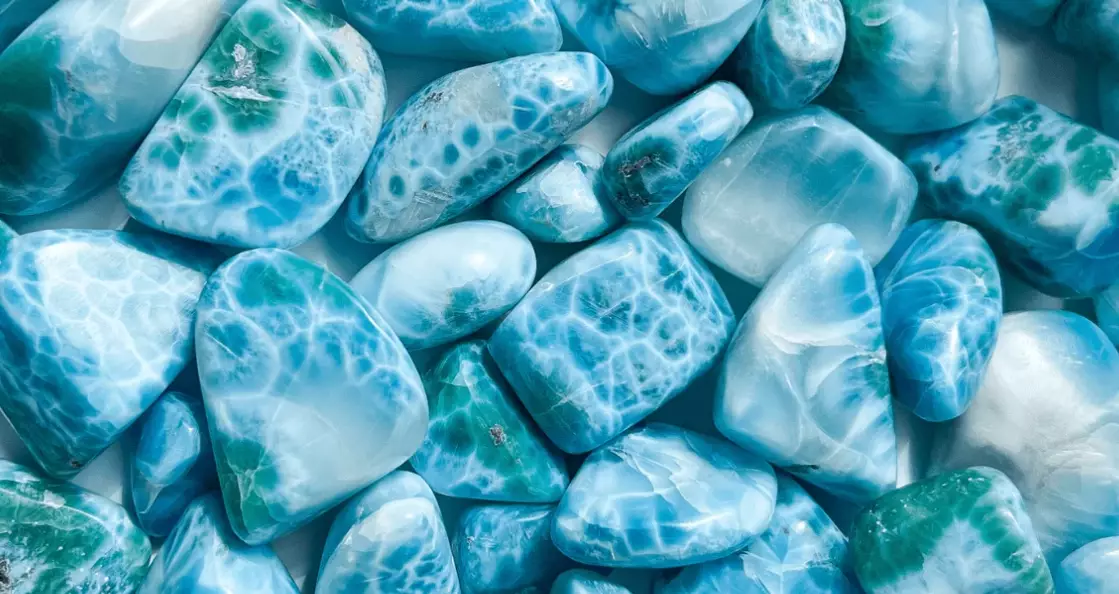
Why Larimar’s Geology Makes It One-of-a-Kind
Here’s the first major special factor: Larimar is found in only one place on Earth. It's a variety of the mineral pectolite, but while blue pectolite exists elsewhere, gem-quality Larimar comes exclusively from a single, small mining area near the town of Barahona in the Dominican Republic. According to the Dominican Republic’s Ministry of Energy and Mines, the mining zone is incredibly limited.
The geology is specific. Volcanic activity millions of years ago caused unique combinations of elements—copper (which gives the blue color), manganese, and others—to crystallize within volcanic rock cavities under precise conditions. No other location has replicated this recipe. When a mine vein is exhausted, that's it. This singular origin is the bedrock of its rarity and value.
The Meaning Behind Larimar’s Oceanic Color
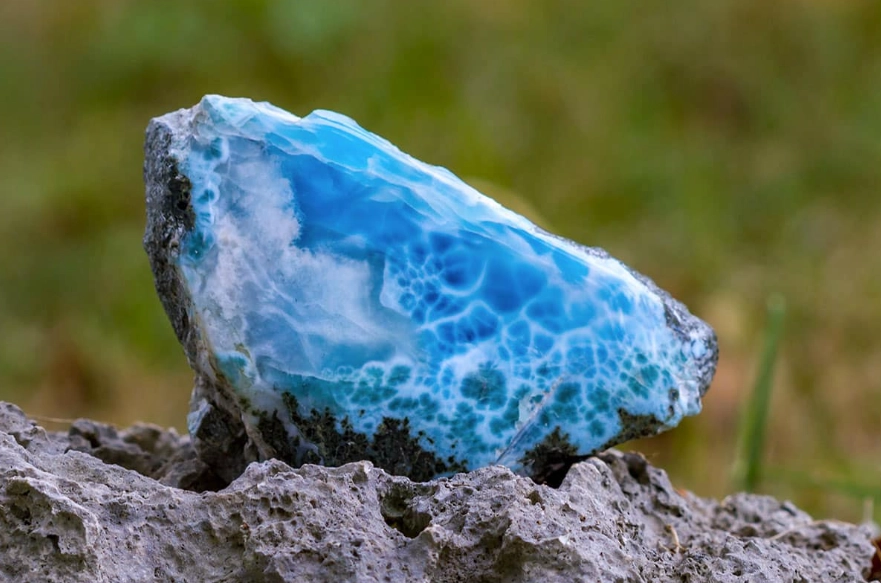
The color isn't just "blue." It ranges from white and light blue to deep volcanic blue and greenish-blue, often in swirling, cloudy patterns. This directly mirrors the Caribbean waters surrounding its homeland. In crystal healing, this is its primary metaphor: calm, communication, and clarity. The stone is almost universally associated with the throat chakra (communication) and the heart chakra (emotional calm).
But here’s a non-consensus point many sellers won't mention: the most common, inexpensive Larimar is often a very pale, almost white-blue with little pattern. The deep, vibrant sky-blue or ocean-blue with dramatic patterns commands a premium. When someone says "Larimar is expensive," they're usually referring to the high-grade material. The pale stuff is more affordable but lacks the visual impact.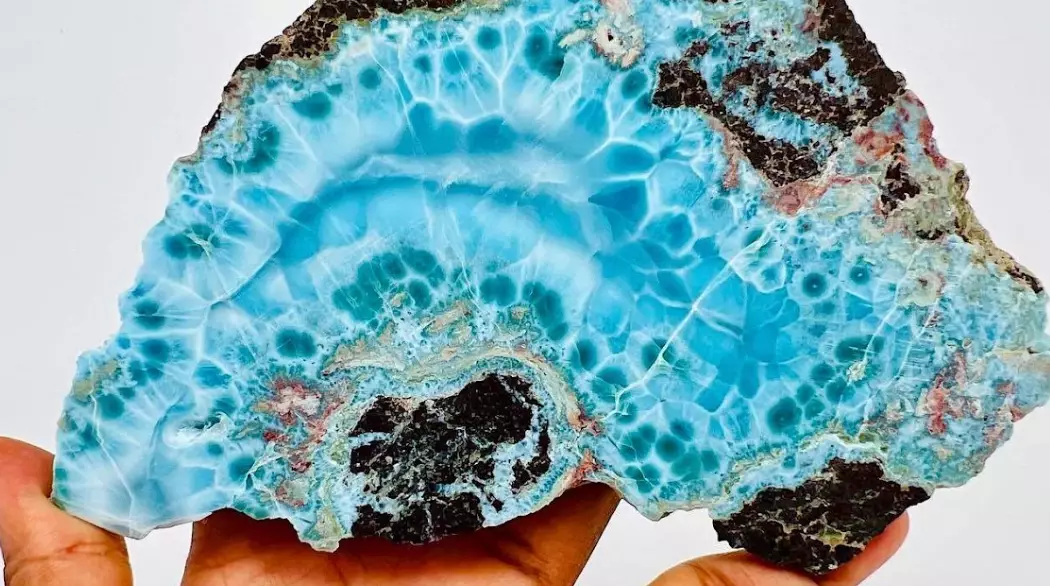
Quick Color & Grade Guide: Think of Larimar grades like coffee. Commercial grade (pale, lots of white) is your instant coffee. Premium grade (vivid blue, some pattern) is your good café brew. Collector/Vibrant grade (deep, intense blue with stunning patterns) is your single-origin, small-batch specialty roast. The price jump between each is significant.
The Healing Properties of Larimar: More Than Just a Pretty Stone?
This is where Larimar's specialness gets personal for many. In metaphysical circles, it's not a passive beauty. It's considered an active, soothing stone. Common attributed properties include:
- Emotional Calm: Believed to dissolve stress, panic, and outdated emotional patterns, replacing them with serenity. It's often called a "stone of peace."
- Communication: Linked to the throat chakra, it's said to help express thoughts and feelings with clarity and compassion, especially in difficult conversations.
- Physical Association: Some practitioners use it for throat issues, inflammation, or sunburn, aligning with its "cooling" water energy. (Note: This is not a substitute for medical advice).
Does it "work"? That depends on your belief system. The placebo effect is powerful, and holding a beautiful object that symbolizes calm can genuinely influence your state of mind. From an anthropological view, Larimar’s rapid ascent as a healing stone is a perfect case study in how modern gem lore is created.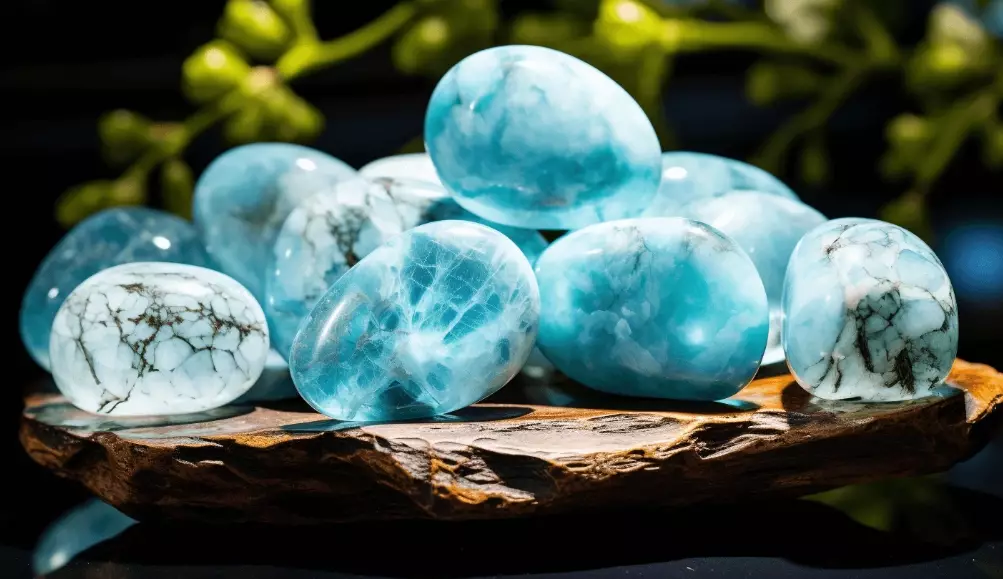
Larimar’s Value & Investment Potential: What You’re Really Paying For
Let's talk money, because Larimar can be shockingly pricey. A high-quality, large cabochon can cost hundreds or even thousands of dollars. Why?
| Factor | Impact on Price | What to Look For |
|---|---|---|
| Color Depth & Saturation | Highest impact. Deep, vibrant "volcanic" blue is top-tier. | Avoid stones that are mostly white or very pale. |
| Pattern (Chatoyancy) | Dramatic swirling, especially red patterns (from iron oxides), increases value. | Unique, eye-catching patterns are desirable. |
| Clarity & Lack of Cracks | Larimar is often included. Major cracks or pits lower value and durability. | Examine under good light for surface breaks. |
| Cut & Polish | A skilled, symmetrical cut that showcases the color and pattern adds value. | A poorly polished stone looks dull and cheap. |
| Carat Weight/Size | Large pieces of high-grade material are exceptionally rare, so price per carat jumps. | Small tumble stones are entry-point; large display pieces are investments. |
Is it an investment? For the average buyer, no—it's a personal purchase. The market is niche and resale can be difficult. However, top-quality pieces from renowned Dominican artisans or designers have held and increased their value over time, similar to fine art. You're buying beauty and rarity, not a stock certificate.
The Fake Problem: Larimar's popularity has spawned imitations. Howlite or magnesite dyed blue, synthetic materials, and even colored glass are common. A too-perfect, uniform blue at a low price is a major red flag. Real Larimar has variations, inclusions, and a waxy luster.
Where to Buy Authentic Larimar & How to Spot Fakes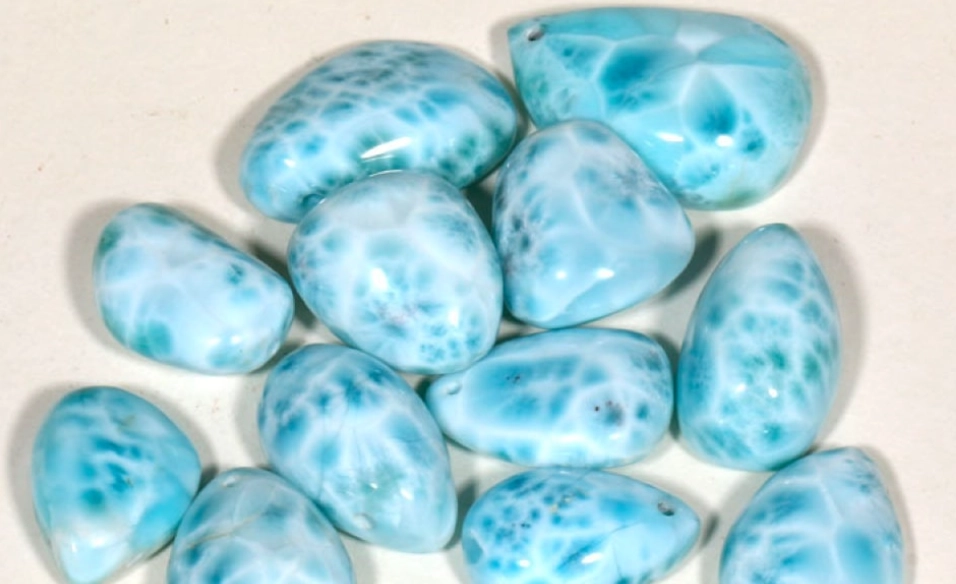
Your buying channel drastically affects price, authenticity, and experience.
Online Marketplaces vs. Local Dominican Shops
Buying Online (Etsy, eBay, Specialty Crystal Shops):
- Pros: Huge selection, accessible, often cheaper for lower-grade pieces. You can read reviews.
- Cons: You cannot inspect in person. Risk of fakes or mis-graded stones is high. Photos can be misleading.
- Tip: Buy from sellers with detailed, un-filtered photos (including close-ups of flaws), clear return policies, and who specify "natural Dominican Larimar." Ask for a certificate of authenticity for high-value items.
Buying in the Dominican Republic (Barahona, Santo Domingo):
- Pros: You see the stone firsthand. Can support local miners and artisans directly. Often find unique, rough pieces.
- Cons: Travel required. Tourist shops in Punta Cana may sell overpriced or lower-quality stock. Bargaining is expected.
- Tip: Visit reputable workshops like Las Mercedes Larimar Mine or established stores in the Colonial Zone of Santo Domingo. Be prepared to pay fair prices for quality; extreme bargains are suspect.
Caring for Your Larimar: A Simple Maintenance Guide
Larimar is relatively soft (4.5-5 on the Mohs scale). Treat it like a precious heirloom, not everyday jewelry.
- Cleaning: Use only warm water, a mild soap, and a soft cloth. Never use ultrasonic or steam cleaners, harsh chemicals, or acids.
- Storage: Store separately in a soft pouch to prevent scratches from harder gems.
- Wear With Care: Remove before showering, swimming (chlorine is bad), exercising, or doing household chores. Sunlight can fade the color over prolonged exposure.
- Energetic Cleansing: If you subscribe to that, use gentle methods: smudging with sage, sound (singing bowl), or placing it on a selenite plate. Avoid salt or prolonged water immersion.
Your Larimar Questions, Answered by a Collector
Is Larimar expensive? How much should I expect to pay for a real piece?
It runs a wide gamut. A small, pale tumbled stone might cost $10-$20. A decent, medium-sized pendant with good blue color could be $75-$150. A large, high-quality ring or statement pendant with deep color and pattern easily starts at $300 and can go into the thousands. If a price seems too good to be true for a deep blue piece, it usually is.
I’ve heard there are a lot of fakes. How can I tell if my Larimar is real?
A few tell-tale signs. First, temperature. Real stone feels cool to the touch and warms slowly. Plastic or glass feels room temperature. Second, pattern. Fakes often have a uniform, dyed look or obvious brush strokes of color. Real Larimar has natural, cloud-like, uneven color zones and inclusions. Third, weight. It should feel appropriately heavy for a stone. Finally, a hot needle test (carefully!) on an inconspicuous spot: plastic will melt and smell; stone won't. When in doubt, get it checked by a jeweler.
 What’s the difference between Larimar and “Blue Pectolite” from other countries?
Chemically, they're the same mineral. Aesthetically and commercially, worlds apart. Pectolite from other locales (like Canada or the US) is typically fibrous, grayish, or a dull blue, and not suitable for gemstone cutting. It lacks the vibrant, translucent blue color and smooth polish of Dominican Larimar. In the market, "Larimar" is the trade name specifically for gem-quality blue pectolite from the DR.
Can Larimar get wet? I want to wear it in the shower or cleanse it in water.
Brief exposure to water (like washing hands) is fine. Prolonged soaking, especially in hot or chemically treated water, is a bad idea. It can seep into tiny surface cracks, potentially damaging the stone or loosening it from its setting. For cleansing, a quick rinse is safer than an overnight bath.
Is it ethical to buy Larimar? I’m concerned about mining practices.
This is a crucial question. Much of the mining is small-scale and manual, which has a lower environmental blast than industrial mining, but working conditions can be tough. The best way to ensure ethical sourcing is to buy from reputable dealers who have direct relationships with mining cooperatives or family-run workshops in the DR. Ask sellers about their sourcing. Buying from a known Dominican artisan or a company that transparently supports the local community is a more responsible choice than an anonymous online bulk seller.
So, what is special about Larimar? It’s the total package: a geological accident from a single hillside, a color that captures an entire sea, a modern-day mythos of healing, and a tangible piece of the Caribbean you can hold. Its value lies in that story and its visual impact. Just go in with your eyes open, understand what grade you're buying, and cherish it for the unique, finite natural wonder that it is.
Related Articles
Grossular Garnet Guide: Colors, Meanings & How to Buy
Azurite Crystal: Deep Blue Stone for Intuition & Insight
Black Kyanite: Ultimate Guide for Protection & Grounding
What is the Spirituality of Citrine? A Complete Guide
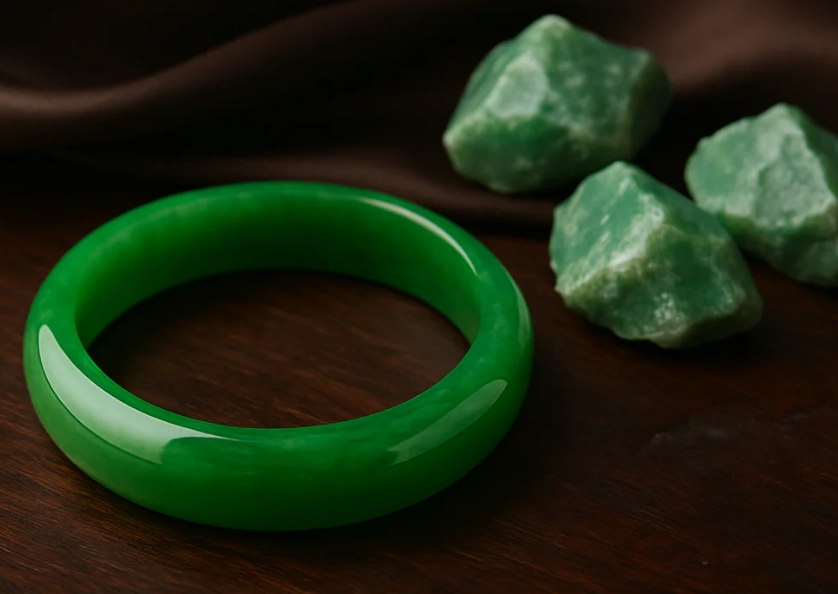
Jade Stone Meaning: Cultural & Healing Significance Explained